
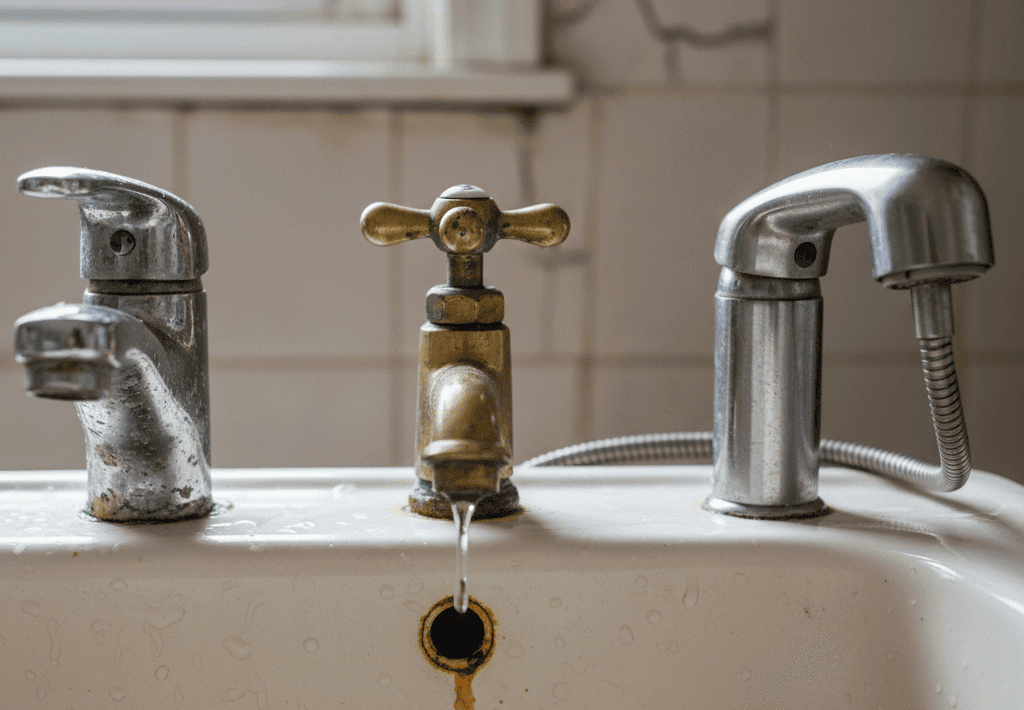
Faucets get used a ton every day, but tiny changes often fly under the radar. After months or even years, those little shifts start showing up as worn-out signs that shout, “Time for attention!” Catching these early clues helps save water, stops costly damage, and keeps kitchens or bathrooms running smoothly. Anyone who cares about a well-working home will get the hang of spotting these hints and keep their space in top shape without surprises. Keep reading to uncover secrets that make faucet care way easier than expected.
This article highlights the most common faucet wear and tear signs and offers practical examples and repair tips. Whether you are a homeowner who likes to try simple fixes or someone who wants to know when a professional makes sense, the guidance below will help you decide what to do next.
Drips and slow leaks that worsen over time
A faucet that drips once every few seconds seems minor. In reality a steady drip can waste gallons of water per day. A single dripper that leaks 60 times per minute can use hundreds of gallons each month. Watch for changes such as a steady stream where a drip used to be or a leak that occurs only when specific handles are turned.
- What to check first. Look at the washer, cartridge, or valve seat. These components wear out with repeated movement and mineral buildup.
- Quick fix options. Shut off the supply valves and replace the rubber washer or O ring for older compression faucets. For cartridge models a new cartridge often stops leaks completely.
- When a leak hides behind the fixture. Water emerging from the base or cabinet indicates internal seals have failed. That risk calls for immediate attention to avoid cabinet damage.
Reduced flow and irregular pressure
Reduced flow is not always a plumbing system problem. Often the aerator at the spout is clogged with mineral deposits. Unscrew the aerator and look for white or greenish buildup. Soaking it in vinegar for 30 minutes usually loosens deposits and restores flow.
Flow issues that hint at larger problems
If the aerator clean does not help, the blockage may be inside the faucet or the supply lines. Hard water accelerates mineral buildup and can score internal surfaces so parts no longer seal tightly. If pressure fluctuates when other fixtures run, suspect the house water supply or pressure regulator rather than the single faucet.
Visible corrosion and surface damage
Corrosion, rust, or pitted finishes show that the faucet surface has degraded. Corrosion often starts around the base, handle joints, or spout where moisture collects. While cosmetic issues do not always affect function, visible corrosion often signals internal wear. Long term exposure to moisture and cleaners accelerates finish breakdown.
- Materials and longevity. Brass and stainless steel faucets resist corrosion better than plated finishes. If you see signs of metal deterioration, consider replacement for a longer lasting solution.
- Small repairs. Scrubbing with a soft brush and a mild descaler helps cosmetic buildup. Avoid harsh abrasives that remove protective coatings.
Handle stiffness or wobble that affects control
Difficulty turning a handle or a loose, wobbly lever are common wear signals. Stiff movement usually means internal mineral buildup or worn cartridge surfaces. A loose handle often stems from a stripped screw or a worn fastening mechanism.
Simple handle fixes
Turn off the water supply and remove the handle to inspect the set screw and cartridge. Replace worn screws and apply a small amount of plumber safe grease to moving metal parts to reduce friction. If a handle remains stiff after cleaning the internals, replacing the cartridge or valve assembly is the next step.
Noisy faucet behavior that signals internal damage
Unusual noises such as knocking, squealing, or a high pitched whine usually mean air in the lines, mineral deposits, or loose components. A knocking sound when a faucet shuts off can point to water hammer in the plumbing. High pitched noises that change with flow may indicate a worn washer or cartridge seat that vibrates under pressure.
- Diagnose with simple tests. Run the faucet at different flow rates and listen. If noise appears only at high flow the issue is likely inside the faucet. If noise is present at multiple fixtures the problem is in the main plumbing.
- Temporary solutions. Install or check an existing water hammer arrester to reduce knocks. Clean the aerator and inspect cartridges for wear that causes vibration.
Mineral buildup that affects seals and movement
Hard water leaves mineral deposits that reduce seal effectiveness and increase friction. Look for white scale, rough deposits around joints, and blocked spray holes on pull down sprayers. Scale that flakes off signals aggressive buildup that shortens component life.
Regular cleaning prevents severe buildup. Remove removable parts and soak in a descaling solution or plain vinegar. For stubborn scale use a soft brush. When buildup has damaged sealing surfaces or moved parts out of alignment replacement is safer and typically cost effective.
When frequent small repairs add up
Replacing a washer here and a cartridge there can feel like a manageable routine. At some point repeated fixes mean the faucet has reached the end of its useful service life. If you find yourself repairing the same fixture multiple times in a year or if parts are becoming costly and hard to source, replacing the unit may be preferable.
Consider the following decision factors
- Age of the faucet. Many faucets last 10 to 20 years depending on material and water quality. Approaching or exceeding that range is a sign to consider replacement.
- Total repair cost versus new replacement. Add recent repair bills. If repair sums approach half the cost of a new fixture it typically makes financial sense to replace.
- Functionality and style. New models often offer better water economy and smoother operation. If the current faucet lacks features you want such as a pull out spray or ceramic disc performance that is another reason to upgrade.
There are times when a professional plumber is the right option. For major leaks that run when supply valves are off, for persistent pressure issues that affect multiple fixtures, or when cabinet water damage appears, call a trained plumber. For local needs many homeowners find reliable service for faucet repair and installation by contacting a trusted provider who can replace parts, match finishes, and handle supply line work safely.
Practical tools and parts to keep on hand
Having a few basic tools and common replacement parts saves time. Useful items include an adjustable wrench, slip joint pliers, a screwdriver set, plumber grease, replacement O rings and washers in common sizes, a replacement cartridge for your faucet model, and a small bucket. Label replacement cartridges by brand and model so you order the correct part next time.
- When working on a faucet turn off the water supply at the shutoff valves under the sink and open the faucet to release pressure. Keep a towel and a small container to catch residual water.
- Match materials. When replacing parts try to use components that match the faucet finish and material to avoid galvanic corrosion or leakage where joins meet.
Examples of common scenarios and steps to take
Scenario 1 A kitchen faucet drips from the spout and the drip rate increases after a week. Action Shut off the supply. Remove and clean the aerator. Replace the cartridge if the drip continues. If the leak was from the base inspect the base O ring and replace it.
Scenario 2 A bathroom faucet handle is stiff and hard to turn. Action Remove the handle and inspect a buildup on the cartridge. Clean the cartridge or replace it if surfaces are scored. Apply grease to the new cartridge for smoother operation.
Scenario 3 A noisy faucet makes a high pitched sound only when set to medium flow. Action Clean the aerator, check cartridge seating, and replace the washer or seat if worn.
Finding early signs of faucet wear and tear gives you options. Small jobs you can handle at home reduce waste and delay the need for replacement. Knowing when to call a professional protects your home from hidden damage. Keep a basic tool kit, replace small parts proactively when signs appear, and plan for replacement when repairs become frequent or costly.
Conclusion
Spotting faucet wear and tear signs early saves water, time, and money. Frequent drips, reduced flow, corrosion, handle problems, noise, and mineral buildup are clear clues that a faucet needs attention. Many common issues are straightforward to fix at home with a few tools and parts. For persistent leaks, pressure problems affecting multiple fixtures, or visible water damage a trained plumber can diagnose and correct the issue safely and quickly. If you face ongoing trouble or prefer a permanent fix a professional service can handle replacement, matching finishes and fitting new hardware with proper installation. Start by inspecting the aerator and seals, keep basic spare parts on hand, and schedule a repair or replacement when small repairs become routine. Taking action now prevents damage later. If you are in need of reliable service contact a local provider and schedule an inspection or a quote to move forward with the repair or a new installation.