
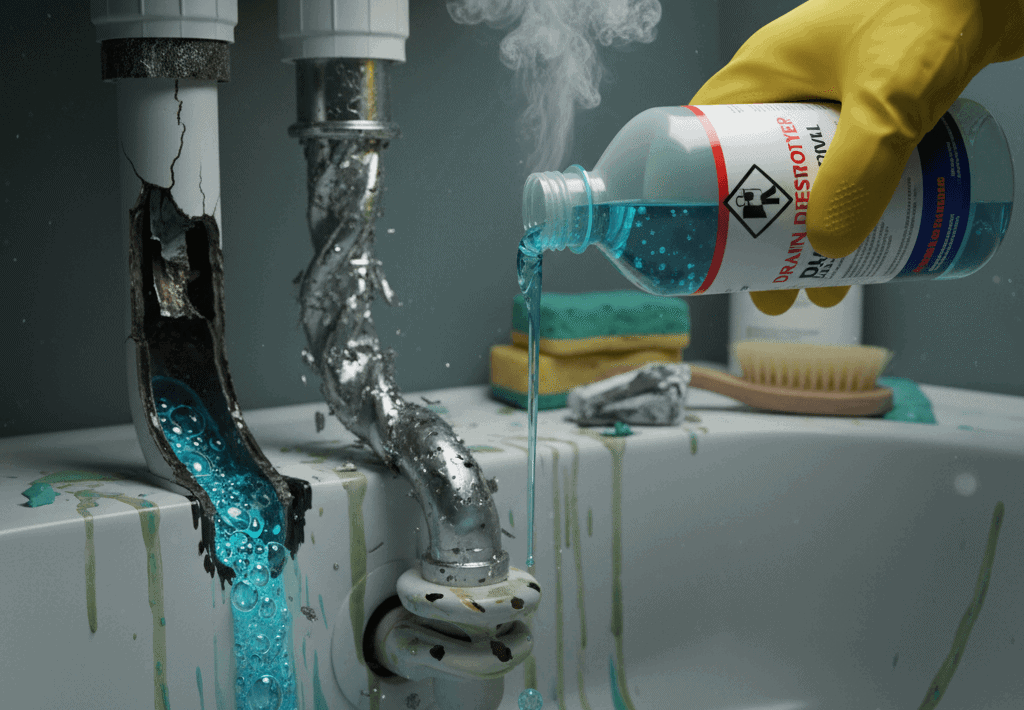
Chemical drain cleaners promise a fast fix for slow drains and stubborn clogs. At first glance they are convenient, available at every hardware store, and their labels claim instant results. That instant relief can come with hidden costs that homeowners do not always see until pipes leak, fixtures fail, or a septic system has been compromised.
In this article I will explain why chemical drain cleaners cause damage, how the damage happens, and what safer options are available. The goal is to give clear, practical information so you can make a better choice the next time a sink or shower slows down.
Why chemical drain cleaners cause damage to plumbing materials
Chemical drain products use powerful reagents to break down organic material. Two common classes are caustic alkalis and strong acids. These substances generate heat and change the chemistry inside pipes. If a clog is organic and near the drain opening the product can work, but that same chemistry can attack pipe walls, solder joints, rubber seals and plastic fittings.
Metal pipes suffer in different ways than plastic pipes. Copper and galvanized steel react with strong chemicals and can develop pinhole leaks over time. PVC and ABS can soften when heated, which weakens joints and makes connections more likely to fail under pressure. Older plumbing systems are often most at risk because the original materials have already been weakened by years of use.
How caustic and acidic cleaners physically harm pipes
Two physical mechanisms explain most of the damage from chemical cleaners. First, heat from the chemical reaction can soften plastics and expand existing flaws. Second, the chemicals themselves can corrode metal and degrade rubber items in traps and seals.
Heat production and plastic deformation
When a caustic cleaner reacts with organic matter it produces heat. If that reaction occurs inside a narrow pipe the temperature rise can be significant enough to warp PVC or ABS. Even slight softening of plastic reduces its strength and makes fittings more likely to slip or fracture later on.
Corrosion of metal and joint deterioration
Acidic cleaners can eat away at solder and galvanized coatings. Metal components that look fine on the surface can hide thinning that leads to sudden leaks. Chemical attack can also cause threaded fittings to seize or develop irregular surfaces that prevent proper sealing during repairs.
How chemical cleaners make clogs worse in some cases
Contrary to marketing, chemical cleaners do not always remove clogs completely. Several common situations lead to temporary improvement followed by recurrent or deeper blockages.
- Partial breakdown creates a paste that hardens when it cools, trapping debris further down the line.
- Heat can melt grease into a sticky coating on pipe walls, which collects hair and solids and forms a more stubborn blockage.
- Chemicals can dissolve parts of a clog while leaving nonreactive materials intact, changing the shape and location of the obstruction so it is harder to remove mechanically.
These outcomes are especially common in older systems, in pipes with low slope, and in traps that have complex shapes where material can lodge and compact.
Health and environmental hazards from chemical drain cleaners
Damage is not limited to plumbing. Many drain cleaning products contain caustic soda or sulfuric acid, which are dangerous to skin and lungs. Accidental splashes during pouring, or splatter when a clogged pipe backs up, can cause severe burns.
Toxic fumes and indoor air risks
Chemical reactions release fumes that can irritate eyes and the respiratory tract. People with asthma or other lung conditions are especially vulnerable. Using these products in small enclosed rooms increases exposure risk and may trigger health problems for household members.
Septic system impact and wastewater effects
If your home uses a septic tank, chemical cleaners can harm beneficial bacteria that break down waste. Weakened bacterial action reduces system efficiency and increases the need for pumping or repairs. In municipal systems the chemicals can disrupt treatment plants and damage workers and equipment.
Signs that chemical damage has already occurred
Recognizing early signs of damage can prevent a costly repair. Look for these warning indicators after using a chemical drain product.
- New leaks under sinks or around pipe joints within weeks of treatment
- Discolored, pitted or bubbled pipe surfaces visible in accessible areas
- Persistent odors that return despite cleaning
- Faster recurrence of the same clog or more severe slow drains in multiple fixtures
If any of these signs appear, stop using chemical cleaners and switch to mechanical methods or contact a licensed plumber for inspection.
Safer alternatives to chemical drain cleaners
There are practical, less harmful approaches that work for most household clogs. These methods reduce the risk of long term pipe damage and protect household members and the environment.
- Plunger use applied correctly can dislodge many sink and toilet clogs and costs little
- Manual snake or hand auger can reach and remove obstructions without corrosive chemicals
- Enzyme based cleaners use bacteria or enzymes to digest organic matter gradually and are safe for septic tanks when used as directed
- Removing and cleaning the P trap under a sink often removes hair and debris with no chemicals required
For hair clogs install a strainer or screen on shower drains and periodically clean the stopper to reduce buildup. For kitchen sinks, avoid pouring fats and grease down the drain and wipe pans clean before washing.
When a chemical cleaner may be harmful to other components in the system
Certain plumbing styles and fixtures are more vulnerable. For example, cast iron used in older home drain lines can rust more quickly when exposed to harsh chemicals. Rubber gaskets, compression fittings, and plastic seals common in modern fixtures can deteriorate after repeated chemical exposure.
Tankless water heaters and wastewater treatment equipment may also be affected. Manufacturers often warn against using these cleaning agents because of potential warranty voiding and part damage. If you are unsure whether a product is safe for your fixtures check the manufacturer instructions or consult a plumber.
What to do if chemical cleaning has caused damage
First step is to stop pouring more chemicals into the system. Additional product will not reverse damage and may escalate chemical reactions. If there is active leakage or visible corrosion take these steps.
- Shut off the water supply to the affected fixture to limit further leakage
- Ventilate the area to reduce exposure to fumes and open windows if possible
- Wear protective gloves and eye protection when handling contaminated traps or fittings
- Collect leaking water in a container and clean up spills using plenty of water
If the problem involves persistent leaks, damaged joints, or concerns about the integrity of a main drain line call a licensed plumbing expert for an evaluation and repair. For local professional help you can reach out to Brightwater Plumbing to arrange an inspection and repair plan that avoids further chemical use.
Practical tips to prevent clogs without chemicals
Prevention is the most effective way to avoid using harsh products. A few regular habits will reduce blockages and extend the life of plumbing components.
- Run hot water down kitchen drains after dishwashing to carry away light grease
- Install hair catchers in showers and bathtubs and clean them weekly
- Dispose of food scraps and grease in the trash rather than the sink
- Keep pH neutral cleaning products in the home for regular maintenance of drains
- Schedule professional drain inspections for older homes to identify issues before they escalate
Regularly checking accessible drains and traps for buildup reduces surprises and keeps repairs small and inexpensive.
To sum up, chemical drain cleaners can offer a quick fix for some clogs, yet they carry a real risk of causing pipe damage, health hazards, and septic system disruption. Choosing mechanical clearing methods, enzyme based products, and good preventive habits will protect your plumbing and reduce repair costs. When damage does occur, shutting off water, ventilating the area, and contacting a licensed plumber for a careful inspection are the safest steps. If you want professional guidance that minimizes risk to your pipes call a local plumbing service and arrange an assessment. A trained technician can remove clogs safely, repair weakened materials, and recommend long term solutions to keep drains flowing without resorting to harsh chemicals.